
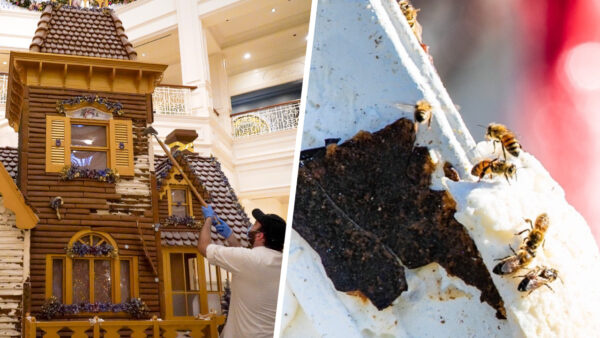

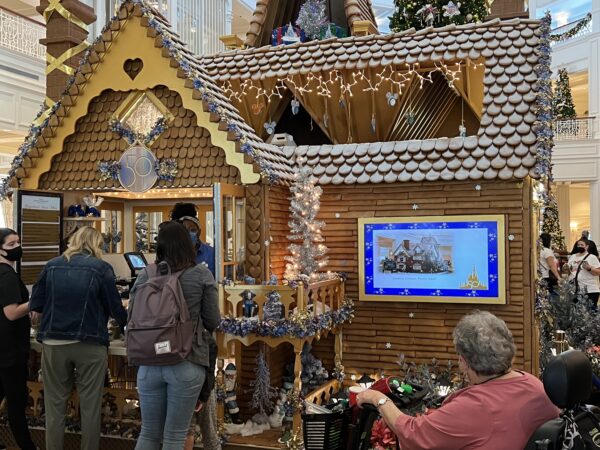
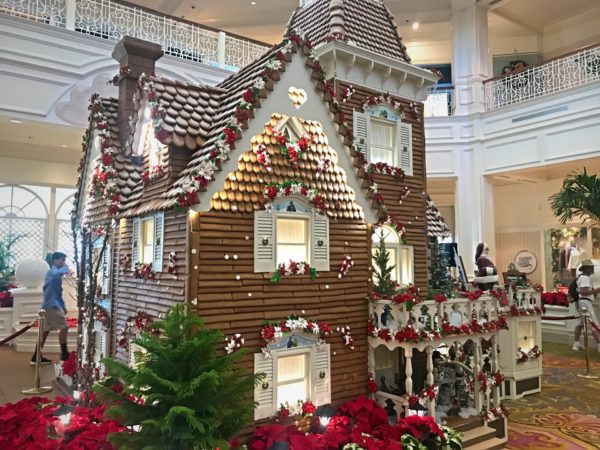
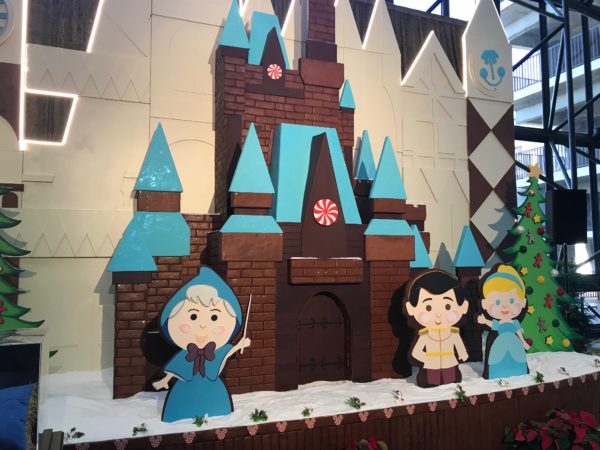
We all know that Walt Disney World’s gingerbread houses are a key staple of Christmas in the Parks. The giant festive houses fill resort lobbies with the scent of warm cinnamon and ginger and act as a great selfie spot. But what happens to these magical displays after the Christmas season is over?
The Disney Parks Blog recently took to social media to show you how the gingerbread houses are recycled and repurposed, it’s un-bee-lievable.
From the Disney Parks Blog
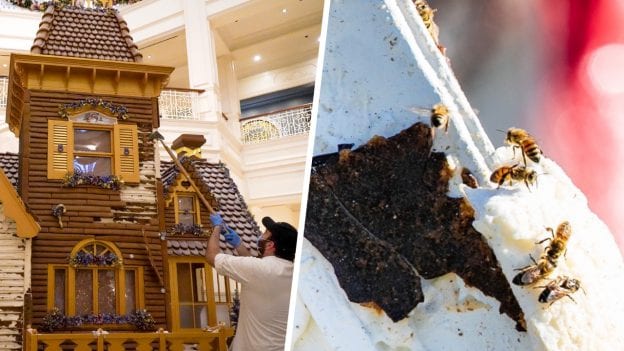
Ten years ago, when performing our annual gingerbread display cleaning, we noticed bees were very attracted to the sugar on the displays after deconstruction. We decided to bring the display pieces to our Disney tree farm and lay them out in our field to give the bees a chance to collect the sugar on the wooden structures.
– Barry Stockwell, Planned Work Specialist with Event Decorating Support
Disney is committed to conservation and caring for the environment. With the bee populations declining around the world, Disney has made it a mission to provide pollinators with even more habitat and resources through pollinator-friendly gardens located across property.

For the last decade, Disney surprised local bees with this sweet gift around the holidays. Now, thousands of local bees visit the displays each year to enjoy this sugary treat, which helps the declining bee population by keeping them well-fed during the winter months when food sources are harder to find.
The recycling process begins after the holiday season has ended when the Walt Disney World Event Decorating Support team and Pastry Chefs begin removing gingerbread from the wooden structures used to build the gingerbread displays.
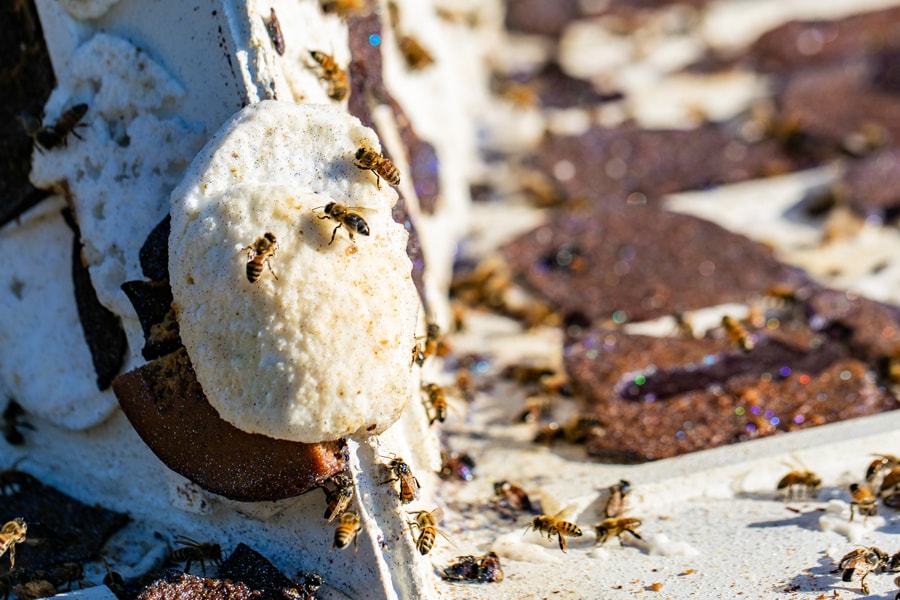
Once the gingerbread is removed, it’s recycled to use for compositing, leaving a wooden structure covered in royal icing made of sugar. The team then breaks down the structure piece by piece and transports it to the Walt Disney World Resort tree farm. Then, it’s all up to the bees to find the sugar-coated wooden pieces and collect the sugar.
After the bees have left, the wooden pieces are power washed with hot water, and the display is stored until the next holiday season.
This story gets even sweeter! The bees that visit the gingerbread displays come from right here in Central Florida.
Honey bees can typically travel up to about two miles to search for nectar and pollen, and in this case sugar.
– Zak Gezon, Conservation Manager for Disney’s Animals, Science and Environment
Keeping the bees well-fed helps local farmers produce honey to harvest and sell to markets or even contribute to honey blends that are sold wholesale to large companies to use in delicious culinary creations, including, you guessed it, gingerbread.
Keep a lookout for these bees flying across property collecting nectar, sugar and pollinating the flowers around our parks and resorts. They might just “bee” responsible for some of the delicious ingredients found in your favorite Disney dishes and desserts!”
Glad that Disney recycles gingerbread houses with bees?