
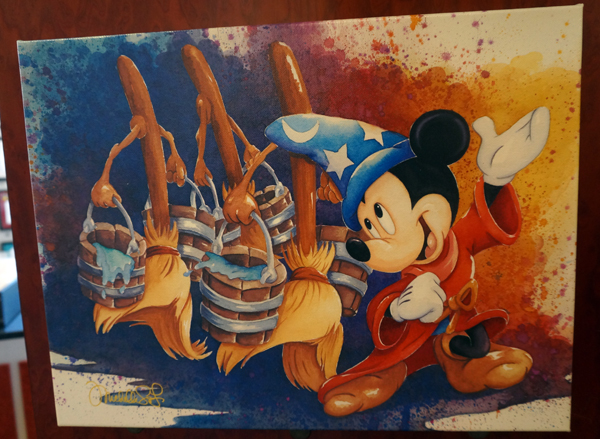

Hold on to your Mickey ears, folks, because we’re about to embark on a thrilling, laughter-filled journey into the surprisingly scientific world of Disney cartoons!
Forget dry textbooks and stuffy lectures, because we’re diving headfirst into a universe where animation meets ingenuity, where imagination dances with physics, and where clever scientific principles often underpin heartwarming stories! Prepare to be amazed, because the magic of Disney isn’t just about singing snowmen and talking lions – it’s about understanding the world around us, often in ways we don’t even realize!
Science And Disney
From the earliest shorts to the most cutting-edge animated features, Disney has subtly (and sometimes not-so-subtly!) woven elements of science into the very fabric of their narratives. We’re not talking about documentaries here; we’re talking about pure, unadulterated entertainment that sneakily educates, inspires, and ignites a childlike wonder that stays with us long after the credits roll.
Laws of Animation
Let’s start with a classic: The Laws of Animation Physics! These aren’t your everyday Newtonian laws, mind you. These are the laws of “squash and stretch,” of “anticipation,” of “exaggeration” – principles that, while not strictly conforming to reality, are deeply rooted in our understanding of motion, force, and gravity. Think about Wile E. Coyote’s gravity-defying falls off cliffs – while clearly impossible, the drawn-out descent and eventual crash emphasize the *effect* of gravity in a way that’s both hilarious and strangely insightful. Or consider the exaggerated movements of Mickey Mouse, his rubbery limbs and expressive face communicating emotion with incredible clarity. These techniques, perfected over decades of Disney animation, tap into our intuitive understanding of physics to create believable, engaging characters, even when those characters are anthropomorphic mice or sentient teapots!
The Absent-Minded Professor
But the science doesn’t stop there! Disney has always been fascinated with exploring real-world scientific advancements, often weaving them into their stories with remarkable foresight. Consider the fantastical inventions of The Absent-Minded Professor and his revolutionary “Flubber.” While the bouncing green goo might seem purely whimsical, it explores themes of polymer science and the potential for synthetic materials to revolutionize our world. The movie, in its own lighthearted way, touches on the very real research happening in laboratories even today!
Fantasia
And let’s not forget the dazzling spectacle of Fantasia! This groundbreaking film wasn’t just a feast for the eyes; it was a sophisticated exploration of the relationship between music, visual art, and scientific principles like sound waves and vibration. The “Toccata and Fugue in D Minor” sequence, with its abstract shapes and pulsating colors, directly translates the auditory experience into a visual one, demonstrating the interconnectedness of these seemingly disparate fields. The “Rite of Spring” segment, showcasing the evolution of life on Earth, was groundbreaking in its depiction of prehistoric creatures based on the best scientific understanding of the time. “Fantasia” wasn’t just entertainment; it was a bold experiment in scientific communication through art!

The Lion King
The Lion King offers a surprisingly sophisticated lesson in ecology and the delicate balance of the food chain. The Circle of Life, depicted in the film’s iconic opening sequence, is a visual representation of interconnectedness within an ecosystem. From the grazing gazelles to the predatory lions, the movie subtly explores the role of each species in maintaining a healthy environment, a concept crucial to understanding modern conservation efforts.
The Little Mermaid
And then there’s the underwater world of The Little Mermaid. While we might be enchanted by Ariel’s singing and her quest for true love, the movie also offers glimpses into marine biology and the diverse ecosystems that thrive beneath the waves. From the vibrant coral reefs to the strange and wondrous creatures that inhabit the ocean depths, “The Little Mermaid” sparks curiosity about the unexplored wonders of our planet and encourages us to consider the importance of protecting these fragile environments.

Pixar Movies
But the real scientific powerhouse of Disney comes into its own with the advent of Pixar. From the realistic fur of Sully in Monsters, Inc. to the breathtaking ocean simulations in Finding Nemo, Pixar movies are technical marvels that push the boundaries of computer animation. These films are not just aesthetically pleasing; they are products of cutting-edge research in areas like fluid dynamics, light and rendering, and artificial intelligence. The realism achieved in these films is a testament to the dedication and ingenuity of the animators who constantly strive to replicate the complexities of the real world in a digital environment.
Finding Nemo
Take, for instance, the swirling, cascading currents of the East Australian Current in Finding Nemo. Replicating the behavior of water in a realistic way requires sophisticated mathematical models and powerful computing resources. The animators at Pixar spent countless hours researching oceanography and developing new techniques to accurately portray the movement and properties of water, resulting in some of the most stunning and believable aquatic environments ever seen on screen.

Inside Out
Similarly, the expressive faces of the characters in Inside Out are a marvel of animation psychology. The filmmakers consulted with neuroscientists and psychologists to understand how emotions work and how they manifest themselves in our behavior. This research informed the design of the characters and their interactions, resulting in a film that is not only entertaining but also offers a profound insight into the inner workings of the human mind.
WALL-E
And let’s not forget the ecological message at the heart of WALL-E. This seemingly simple story of a lonely robot cleaning up a polluted Earth is a powerful commentary on environmental responsibility and the consequences of unchecked consumerism. The film’s stark depiction of a trash-filled planet serves as a stark warning about the potential for environmental devastation and encourages us to take action to protect our planet for future generations.
Moana
Even more recent films like Moana showcase impressive scientific accuracy. The ocean plays a vital role in the film, and the depiction of Polynesian wayfinding and navigation techniques is meticulously researched. From understanding ocean currents and wave patterns to using the stars for guidance, Moana’s journey is a testament to the ingenuity and scientific knowledge of ancient Polynesian seafarers. The film subtly teaches about the importance of respecting and understanding the natural world.

Beyond Fairy Tales: Curiosity And Understanding
In conclusion, the magic of Disney cartoons isn’t just about fairy tales and happy endings; it’s about igniting our curiosity, expanding our understanding of the world, and showcasing the beauty and wonder of science in a way that’s accessible to audiences of all ages. From the physics of animation to the complexities of marine biology, from the wonders of computer graphics to the importance of environmental responsibility, Disney movies are a testament to the power of storytelling to educate, inspire, and entertain. So next time you’re watching your favorite Disney classic, remember to look beyond the singing princesses and talking animals, and appreciate the subtle scientific magic that makes these stories so captivating and enduring! You might just learn something new! Oh boy! Isn’t that fantastic?
Do you enjoy the nods to science in Disney entertainment?